You are here:
Home/Uncategorized

STP, ETP or WTP? A Plain Guide to Choosing the Right Treatment Plant in Bangladesh

Ask three suppliers in Dhaka to quote for the same building and you can get three different plant types back. The confusion is usually terminology rather than engineering, and it is expensive: a plant designed for the wrong stream will not meet its discharge standard no matter how well it is built.

What is the difference between an STP, an ETP and a WTP?

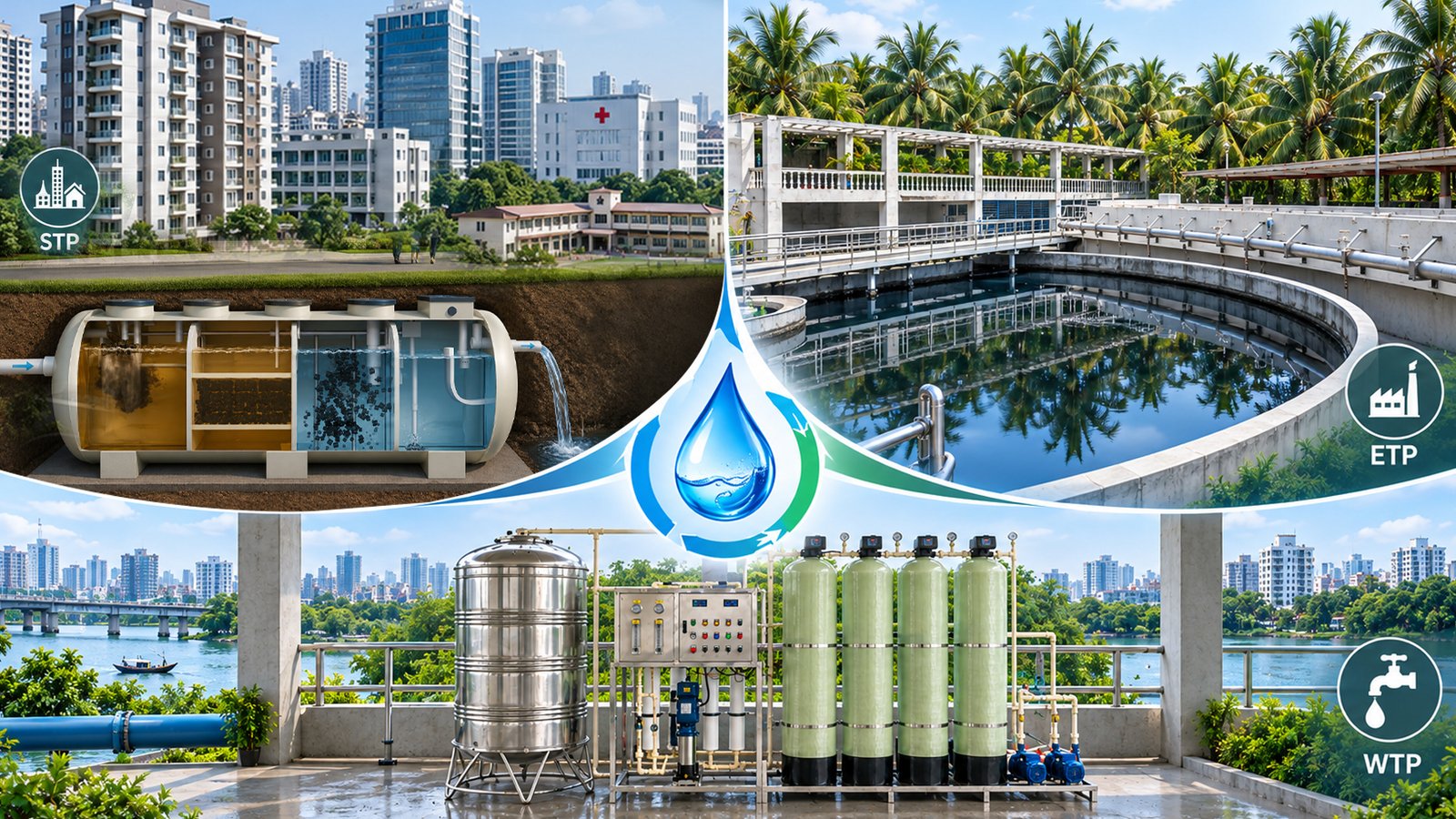
A sewage treatment plant (STP) treats domestic wastewater from toilets, kitchens, bathing and laundry. An effluent treatment plant (ETP) treats industrial process wastewater such as dyeing, washing or chemical discharge, which carries a heavier and far more variable pollutant load. A water treatment plant (WTP) works at the opposite end of the site: it treats incoming raw water from a deep tube well, river or supply line so it is fit for use. STP and ETP clean water on the way out. A WTP cleans it on the way in.

Which one does your project need?

•    Apartment building, office, hotel, hospital, school or mixed-use development: an STP.

•    Dyeing, washing, printing, tannery, food processing or pharmaceutical plant: an ETP, sized for the process load rather than headcount.

•    Any site where iron, hardness or salinity in the raw water damages equipment or affects the process: a WTP.

•    A factory with production lines and worker facilities: usually an ETP and an STP, designed and sized separately.

Mixing the streams to save on capital cost is a common shortcut and a poor one. Domestic sewage entering an ETP dilutes the process load and upsets biological treatment; industrial effluent entering an STP overwhelms it. Discharge standards also differ by stream and industry category, so one plant handling both is hard to prove compliance for.

What is an MBR, and why does it suit dense urban sites?

A membrane bioreactor (MBR) combines biological treatment with membrane filtration in a single stage. Wastewater passes through screening, then biological treatment, then membranes with pores fine enough to hold back suspended solids and most microorganisms, followed by disinfection. Because the membrane does the separation work a large settling tank would otherwise do, the plant occupies a smaller footprint and produces a cleaner outlet. On constrained Dhaka sites, where basement area is expensive and treated water can be reused for flushing or landscaping, that combination is often what makes the project viable. Charm Ltd. supplies both packaged and MBR systems, working with Mitsubishi membrane technology from Japan.

Five things that decide whether a plant actually works

1.  Sizing against real load. Plants sized on optimistic occupancy fail once the building fills. Oversizing wastes capital and runs inefficiently at low load.

2.  Sludge handling. Every treatment process generates sludge. If no footprint, dewatering equipment or disposal route is planned, the plant chokes.

3.  Power. Aeration and membrane systems draw continuous power. Backup arrangements belong in the design, not in a later retrofit.

4.  A trained operator. A treatment plant is an operated process, not an installed asset. Without a competent operator, a maintenance schedule and a consumables budget, performance falls away within months.

5.  Monitoring records. When an inspection comes, discharge logs and test results are the evidence. A plant running without records cannot demonstrate compliance even if it is performing well.

How to compare suppliers

Ask for reference plants of comparable type and capacity that you can visit while they are running. Ask for guaranteed outlet parameters in writing, tied to the standard you are held to. Ask who operates the plant after commissioning, for how long and at what cost. And ask where spares come from, because imported equipment with no in-country service becomes an idle asset the first time a blower fails.

FAQ

What is the difference between an ETP and an STP?

An ETP treats industrial process wastewater containing chemicals, dyes or heavy metals. An STP treats domestic sewage from toilets, kitchens and washing. They use different processes and are held to different discharge standards, so a site generating both streams normally needs both plants.

What is an MBR sewage treatment plant?

A membrane bioreactor combines biological treatment with membrane filtration in one stage. The membrane replaces the large settling tank a conventional plant needs, so the plant is more compact and the treated water is clean enough to consider reusing for flushing or landscaping.

Is a sewage treatment plant mandatory for buildings in Bangladesh?

Requirements depend on the building category, use and location, and are applied through the Bangladesh National Building Code together with conditions set by the relevant approval authority. Confirm the current threshold for your specific project with the approval authority before design begins.

Why do treatment plants fail after installation?

Most often because nobody operates them. Plants installed to satisfy an approval condition, then run without a trained operator, a maintenance schedule or a consumables budget, lose performance within months regardless of how well they were designed.

Share this post?

About author

More posts

Leave A Reply

Your email address will not be published. Required fields are marked *

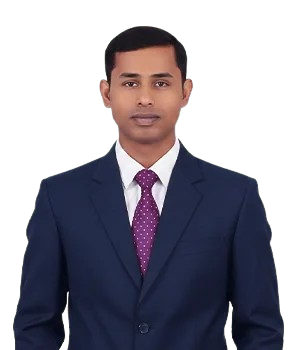
Mohammad Omar Faruk

Director

Got a Specific Question?

Talk to a specialist in your industry

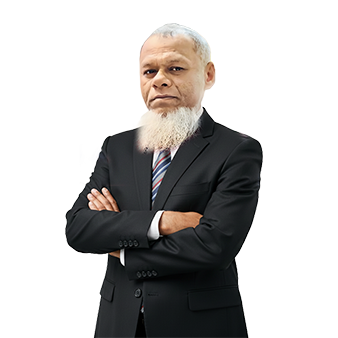
Engr. Abul Hossain Khan Mamun

Director

Engr. Abul Hossain Khan Mamun, a seasoned civil engineer with over 32 years of experience, has significantly shaped Bangladesh’s construction landscape through his leadership and expertise in managing complex building projects. Starting his career at Borak Real Estate Ltd., he progressed from site engineer to project engineer, overseeing residential developments in Banani, Gulshan, and Baridhara, and later led landmark projects like the 27-storey Unique Acropolis and the prestigious Westin Dhaka as Project In-Charge. His roles as Deputy General Manager, Head of Construction, and Director of Construction saw him spearhead high-profile developments, including Hotel Sheraton Dhaka and Borak Mehnur.

Got a Specific Question?

Talk to a specialist in your industry

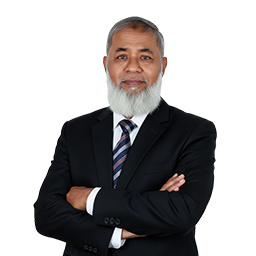
Major Khalid Mahmud, psc (Retd)

Director

With nearly 23 years of distinguished service in the Bangladesh Army, Mr Khalid has built extensive leadership experience across diverse operational, administrative and international roles. He has attended multiple advanced military professional courses and has represented Bangladesh abroad with excellence and integrity.


Mr Khalid brings a disciplined, results-driven and ethical approach to all professional responsibilities, making him a strong asset for any multifaceted business group.


Alongside his military career, Mr Khalid has pursued strong academic development in Business, Human Resource Management and Supply Chain Management. His combined expertise in strategic planning, logistics, operations management and organizational leadership enables him to add significant value to corporate environments.

Got a Specific Question?

Talk to a specialist in your industry

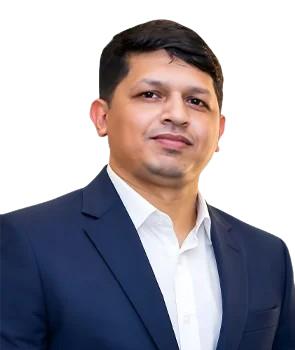
Ahmad Ullah

Director

Ahmad Ullah has been a well-known expert in color management and color processing systems in Bangladesh since 1994. At present, he is primarily involved in sustainability initiatives across both textile and non-textile sectors in Bangladesh.

Got a Specific Question?

Talk to a specialist in your industry

Jukka Hakola

Advisor

With over 30 years of professional experience in the international energy, water technology and industrial sectors, Mr Hakola has developed strong leadership expertise across strategic management, business development and global sales operations. Throughout his career, he has held several senior executive roles including COO, Vice President, Managing Director and Board Member in technology-driven organisations.


Mr Hakola has played an important role in transforming technical innovations into successful commercial products, building international sales networks and leading organisational development initiatives. His extensive experience in strategic planning, market analysis and operational leadership enables him to effectively support business growth in global markets.


With academic qualifications in both Engineering and Economics and a results-driven leadership approach, Mr Hakola brings valuable expertise in technology commercialisation, international business development and organisational management.

Got a Specific Question?

Talk to a specialist in your industry

Dr. Sven Salahuddin Hasse

Advisor

Dr. Sven Salahuddin Hasse is a Doctor of dental surgery graduated in Germany. After 20 years of serving in the health sector, he devoted himself to promote sustainable technologies in the textile industry. He has aquired extensive knowledge about heat recovery and air filtration. There’s a huge demand in the Bangladesh market from the environmental point of view. Surprisingly, the majority of factories are reluctant to use innovative, sustainable technology even though it would enhance their provit margin on the long run.

Got a Specific Question?

Talk to a specialist in your industry

Engr. Fazle Monayem

Advisor

Engr. M. Fazle Monayem, a Civil Engineering graduate from Rajshahi Engineering College (RUET) in 1990, has over three decades of experience in Bangladesh’s major infrastructure projects. He played key roles in the Jamuna and Padma Multipurpose Bridges, Dhaleswari Bridge, Dhaka MRT Line-06, and several national road development initiatives. He has also contributed to industrial projects with Square Pharmaceuticals, Meghna Group, and Abdul Monem Economic Zone, making a lasting impact on the country’s development sector.

Got a Specific Question?

Talk to a specialist in your industry

MD Ekram Ullah

Advisor

MD Ekram Ullah is a seasoned professional with extensive experience in sustainability-driven initiatives across both textile and non-textile sectors in Bangladesh. His work is focused on advancing responsible industrial practices that align environmental stewardship with long-term business performance.


With a strong emphasis on sustainable solutions, he is actively involved in projects related to environmental management, resource efficiency and infrastructure development. Through a strategic and results-oriented approach, MD Ekram Ullah continues to contribute to the adoption of practical, scalable and environmentally responsible systems that support Bangladesh’s sustainable industrial growth.

Got a Specific Question?

Talk to a specialist in your industry

Rui Owase

Advisor

Rui Owase is a wastewater treatment expert with over 20 years of experience in environmental solutions. As the Division Managing Director of Daiki Axis, he oversees operations across Bangladesh, Sri Lanka, Myanmar, and Indonesia, driving sustainable water management initiatives.


His vision aligns with Unissol Group to protect the environment and build a better future. He focuses on promoting clean water solutions and supporting eco-friendly development for long-term impact.

Got a Specific Question?

Talk to a specialist in your industry